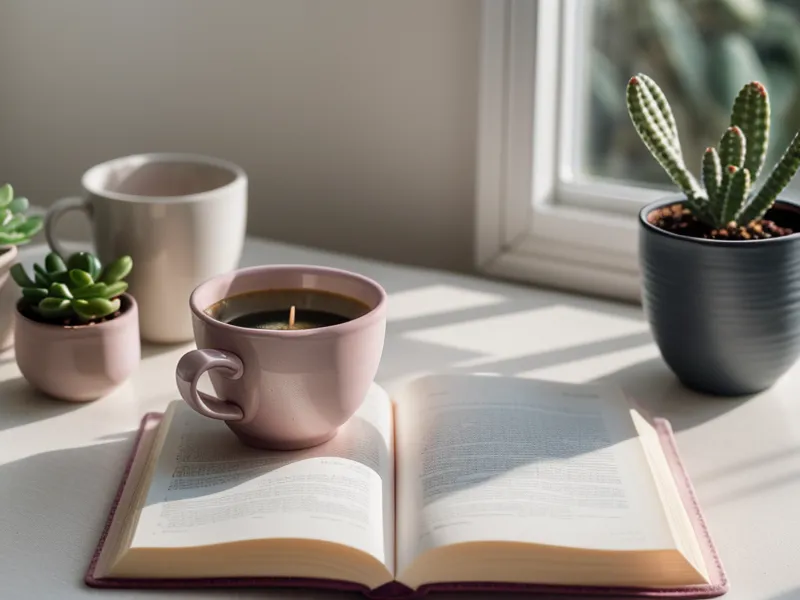
Twelve photos fanned across the floor, and I've been on my knees rearranging the same three for ten minutes. Mismatched mugs. A sky the color of wet slate. A pair of boots that have obviously been somewhere. None of it is for a client. This is the part of my love manifestation practice that nobody at work knows about: me, a graphic designer in Austin, building the exact kind of visual cues I'd make for a brand and aiming them at my own dating life instead. Graphic design and manifestation, sharing the same square of carpet. Honestly, dating in Austin had worn me down to where designing my way toward something real sounded a lot saner than whatever I'd been doing before.
Okay, hear me out. I'm the person who bought a beat-up copy of The Secret last year, fully expecting to hate it, and then very much did not hate it. I hid it under a stack of design magazines for a month because the idea of a friend spotting it made me want to evaporate. So no, I didn't arrive at any of this as a believer. I backed into it sideways, the way you back into a hobby you'd never admit to at brunch.
Before the floor full of photos, I'd tried the obvious route. I asked every coupled friend I had to set me up — all of them, shamelessly. That campaign produced exactly two awkward coffee dates, both of whom ghosted me before the following weekend. So the bar for "embarrassing thing I'm willing to try" was already scraping the ground.
The mood board I built for nobody
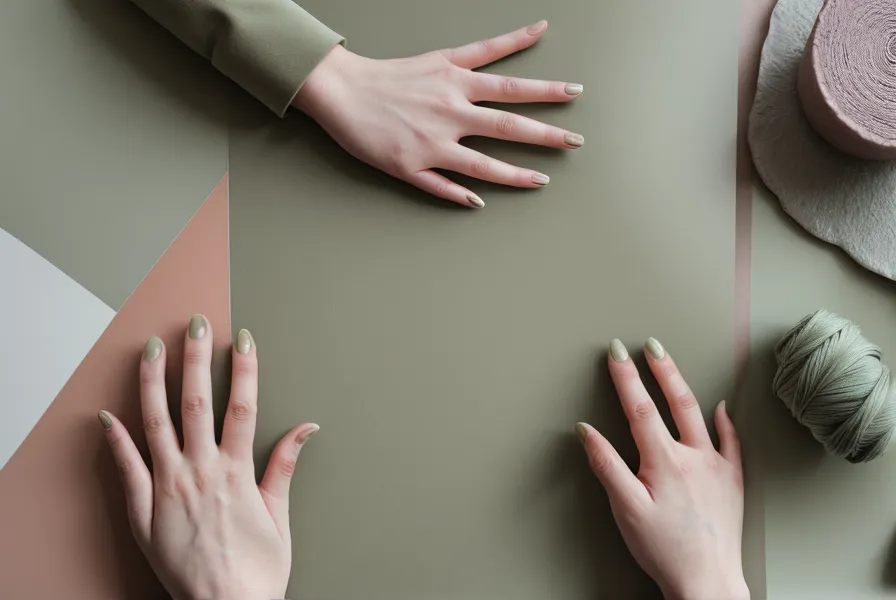
As a designer, I basically live inside mood boards — for clients, for brands, for a coffee shop's whole personality. This one was the first I'd ever made with no audience. I gave myself a hard rule: exactly twelve images, no more. Not a sprawling wall of couple-goals beige linen and staged sunsets, because that stuff makes my eye glaze over. Twelve images that held a feeling, not a fantasy.
I picked for texture, not for faces. Two chipped mugs on a scratched table. That specific charcoal an Austin sky turns right before it finally rains. A muted palette — sage, dusty terracotta, slate, warm cream — that read as grounded and a little rugged instead of glossy. None of it screamed romance. All of it whispered a kind of person.
And before you ask — no, I don't think a color palette ships you a boyfriend. I've messed with most of the toolkit by now — scripting, the 369 method, the new-moon ritual stuff, the whole detaching-from-the-outcome idea — and the visual piece is the only one that ever stuck to me. If you want the origin story, I've written about how I started using manifestation to attract love elsewhere; this was just the next obvious move for a brain that trusts a reference image over a wish.
When a Post-it fooled my coworker
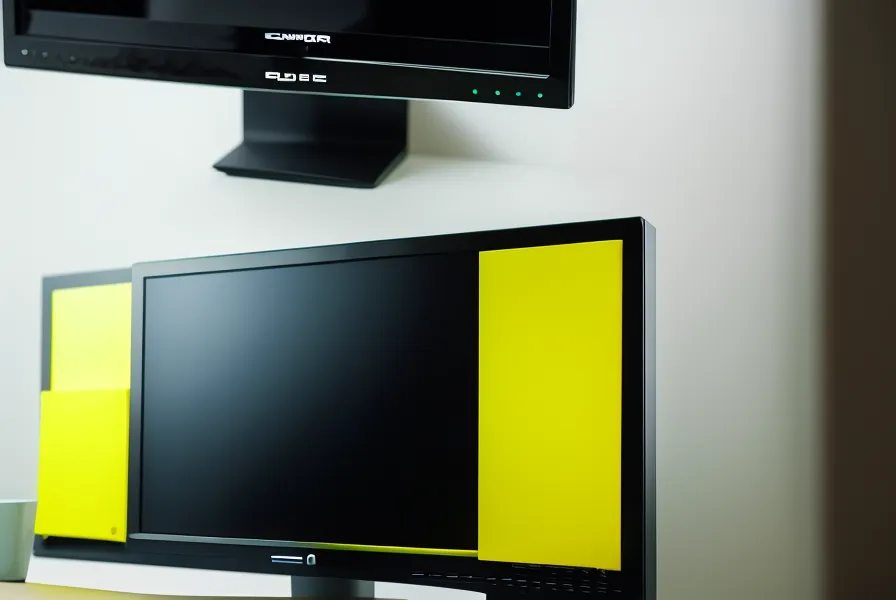
Once the board started working, I got cocky and began leaving myself little cues everywhere: micro-manifestations, single words on Post-its, a phrase tucked where I'd catch it mid-task. One of them, a neon yellow square on the edge of my monitor at work, just said: He listens to the subtext.
A coworker slowed down, squinted, and asked if it was a note for the fintech app — "are we adding a chatbot?" My face went the exact terracotta of my board. "Yeah," I said, "it's a UX thing, addressing the unspoken needs of the user." She nodded and walked off. There I was, a grown professional, using product jargon to cover for the fact that I was manifesting a man who doesn't make me explain why I'm upset for the third time in one week.
That's the quiet magic of a visual cue, though; it only has to mean something to you. To her it was a UI note. To me it was a fence around my standards. I was already neck-deep in my love manifestation journal by then, and these little nudges worked like the components of a design system: small, repeatable, keeping the whole "project" of my love life in front of me without it turning into a chore.
What does a visual anchor actually do?
Here's the part I actually believe in, minus the woo. A visual anchor is a single, concrete image you return to on purpose, so your attention stops wandering and locks onto one target. Closing my eyes to "see a future" never worked for me; my mind sprints straight to my to-do list or whether I left the straightener on. Give that same mind a picture to rest on, though, and it settles. The anchor does the holding so I don't have to.
It's not far from how mood boarding works in real design work — you keep a North Star image pinned up so the project can't quietly drift. That's also why I once tried a soulmate visualization service, not as a prophecy but as a reference image for my own head; staring at one concrete face made me realize the guys I kept choosing were the opposite of what actually grounds me. I wrote a fairly honest review of that soulmate visualization service if you're curious how a skeptic landed on it.
Some nights the visualization just refuses to land. I'll be a few breaths in, finally quiet, and the AC shudders on with a thunk that swallows the room and scatters the whole picture. A friend of mine is taking wheel-throwing ceramics classes over at Austin Community College, and she swears the first twenty pots are pure garbage — you're not making bowls yet, you're just teaching your hands. The board felt exactly like that. Early on it was garbage. I was only teaching my eye.
Around week five, something loosened
It took about five weeks before the board stopped embarrassing me. Around then I walked past it on my way to refill my water and, for the first time, didn't flick my eyes away like I'd been caught — I stopped, and looked straight at it, the way I'd study a layout I was proud of. Small thing. Felt like a hinge.
After that the textures started showing up everywhere, which I know is just my brain doing its thing. Wandering through the Blanton Museum of Art one afternoon, I caught my exact slate-and-terracotta palette in a painting, then on a stranger's jacket, then on a mug down in the cafe. I'm a designer; I know this is the frequency illusion — notice a thing once and suddenly it's everywhere because your brain got primed to find it. Rather than waving it off as "just a glitch," I leaned in. Priming my eye to catch yellow means I can prime it to catch a person worth slowing down for.
Manifestation techniques you'll actually stick with
If this sounds like a heavy lift for someone who just wants a decent Friday-night date, fair. Keep it small. Limit your palette — pick three or four feelings or textures, not "everything," because too many images is just visual noise, and noise is the enemy of clarity in design and in dating alike. Twelve is my ceiling. When a full board feels like too much, use one placeholder object instead: mine's a smooth gray stone I pocketed from the gravel outside the Blanton, and touching it at my desk is a tactile cue to breathe and remember what I'm aiming for.
Cap your looking at about three minutes a morning, too — stare any longer and you slide into "but how, but when," which is the fastest way to strangle the whole thing. And point at least one cue back at yourself: I keep a tiny sketch in my journal reminding me I'm a whole person shopping for a partner, not a half hunting for an other half. If you take one thing from this, make it the test — before a cue earns a spot, ask whether it raises your own standard or just describes a guy. Keep the first kind. Toss the second.
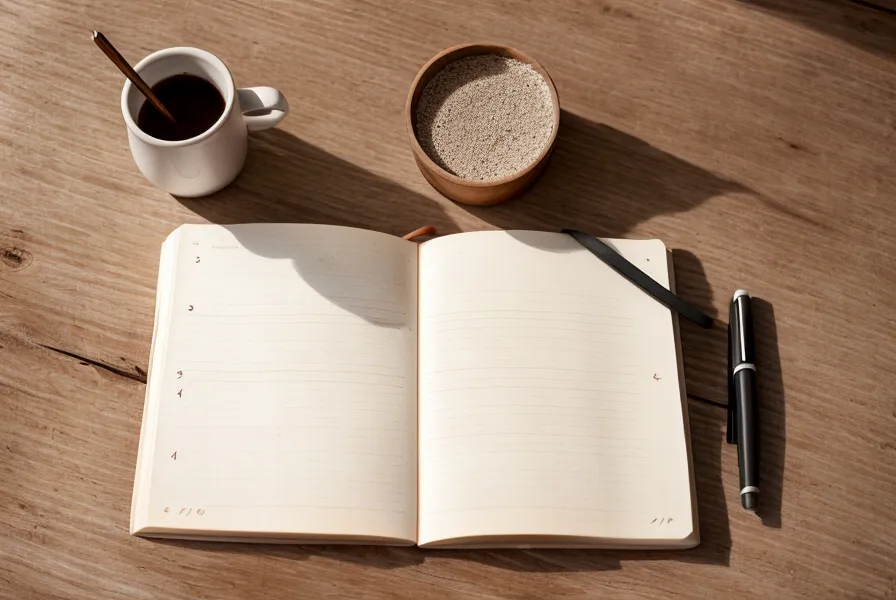
Two years into quietly doing this, I still get caught off guard by my own affirmation journal and I still find a chunk of the Instagram-guru energy deeply cringe. I've got zero medical training and I'm nobody's therapist — if you're carrying real burnout or dating fatigue, please talk to an actual professional, not a graphic designer with a stone on her desk. But using design principles to get clear on what I want? That just reads as good sense to me.
Post-it or full mood board, the cues are only ever reminders — that I'm the one designing this, not just waiting on it. The real shift wasn't the universe handing me anything. It was catching myself looking out the windshield again instead of down at my lap. That part you can borrow, palette or no palette.